
Building a Rail Security Operations Center
Rail organizations increasingly recognize the need for centralized security operations, but building a SOC for OT presents unique challenges. Rail SOCs must operate across safety-critical systems, legacy infrastructure, and distributed environments, while integrating with existing IT security processes.
The Main Challenges in Setting Up a Rail SOC
Rail OT environments generate unfamiliar signals
Traditional SOC tools are designed for IT and lack understanding of rail protocols like RaSTA or EMP, system roles, and operational behavior. All those lead to noise and confusion.

Security and operations teams lack a shared operational view
SOC analysts, engineers, and rail operators often work from different data sets, slowing investigation and response.
Response actions must respect rail safety and uptime
SOC workflows cannot assume systems can be isolated or taken offline without operational consequences.
How CylusOne Enables Rail-Focused SOC Operations
Rail-Aware Security Monitoring for OT Environments
CylusOne provides rail-aware monitoring that translates OT behavior into meaningful security insight for SOC teams. By understanding rail communications and system interactions, it reduces noise and supports actionable analysis.
Shared Operational Context Between SOC and Rail Teams
CylusOne creates a shared operational context between SOC analysts and rail engineering teams. This common view accelerates investigation and improves coordination without forcing operational staff into security tooling they don’t use.
SOC Integration Built for Rail-Safe Operations
CylusOne integrates into existing SOC ecosystems and popular products (like Splunk, QRadar, Sentinel..) while respecting rail constraints. It supports rail-safe investigation and escalation, helping organizations build OT SOC capabilities without disrupting live operations.
Securing All Rail-Specific Systems



Extended Resources
The Rail Cybersecurity Landscape in 2025
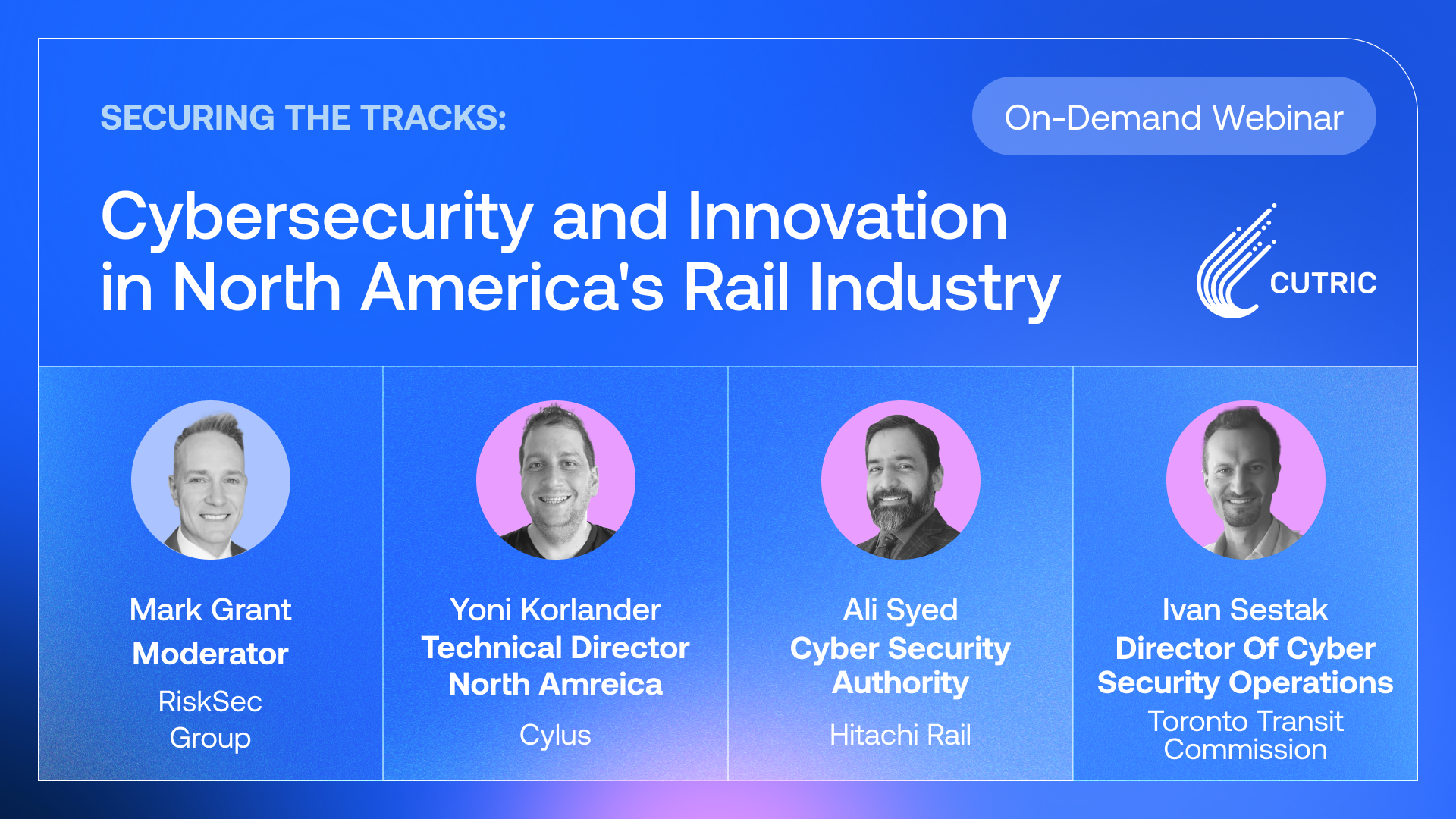
Securing the Tracks: Cybersecurity and Innovation in North America's Rail Industry

Cylus: Cybersecurity Purpose-Built for Rail