
Aligning Rail OT Security with IEC 62443-3-3
IEC 62443-3-3 provides a framework for securing industrial automation and control systems, focusing on system-level security requirements for zones and conduits. Applying this framework in rail OT environments requires adapting theory to safety-critical, long-lived systems.
The Main Challenges in Applying IEC 62443-3-3 in Rail
Defining zones and conduits is difficult without operational insight
Rail systems often evolve organically, making it hard to map boundaries and interactions accurately.

Security requirements must respect safety and certification constraints
Implementing controls cannot interfere with deterministic behavior or validated system configurations.
Assessment requires ongoing validation, not one-time design
IEC 62443-3-3 requires that security be maintained as systems evolve over time.
How CylusOne Supports IEC 62443-3-3 Alignment
Defining Security Zones and Conduits Based on Operational Reality
CylusOne supports the definition of security zones and conduits by mapping real operational communication between rail systems, ensuring zoning reflects how the network actually functions.
Validating Security Design Against Live System Behavior
CylusOne provides insight into whether system behavior aligns with intended design assumptions, helping teams validate that security requirements remain effective as environments evolve.
Supporting Ongoing Assessment of Zone and Control Effectiveness
CylusOne supports incident readiness by providing operational context that helps teams assess scope, impact, and escalation requirements within mandated timelines.
Securing All Rail-Specific Systems



Extended Resources
The Rail Cybersecurity Landscape in 2025
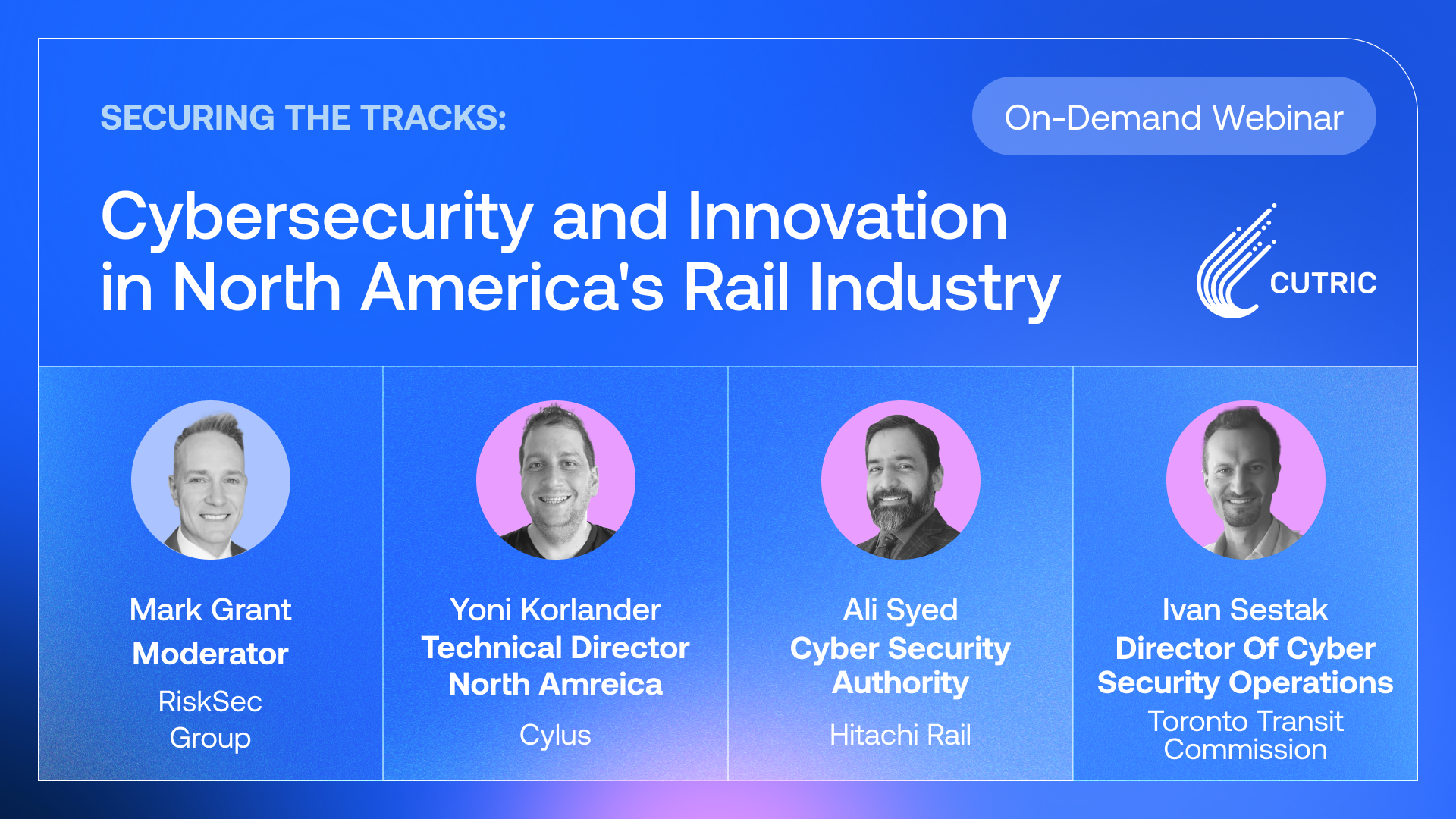
Securing the Tracks: Cybersecurity and Innovation in North America's Rail Industry

Cylus: Cybersecurity Purpose-Built for Rail